The headteacher of Teesside’s most in-demand primary school says it will take years for teachers to help pupils overcome the effects of lockdown and the coronavirus crisis.
Katie Haycock, currently head of Wolviston Primary School – which Teesside Live recently named the hardest primary school to secure a place at locally – says nobody yet knows what long-term damage has been done to children.
“The majority of Wolviston pupils wanted to get back to school to be with their friends and start learning again, but we’ve had to re-establish and relearn their routines,” said Mrs Haycock.
“We carried out a wellbeing survey and the only reason some children didn’t want to come back was worrying about their parents at home, especially if they had health conditions.
“But the long-term effects on children are still not known. It’s not just this year, it’s the knock-on consequences. If you didn’t get your GCSE or A levels it can impact your whole career and the rest of your life.”
Mrs Haycock, who will take up a new role as director of Special Educational Needs and Disabilities at Nicholas Postgate Catholic Academy Trust after Christmas, says vulnerable children and those with special needs have been especially badly hit by missing school during lockdown.
“This has been a difficult time for all of us and especially young people, but the effects are heightened for those children who already have anxiety and get upset by a change of routine or see the world differently,” she said.
“They haven’t had access to the specialist support schools are so good at providing and the one-to-one learning they’re used to. Even the wearing of masks can be problematic with regards to communication.
“Schools will be assessing all children and looking at how they can put in catch-up interventions, but for children with special needs, we need to come up with bespoke, creative strategies.
“We also need to help schools support parents and carers because having a child with special needs can be rewarding but it can also be tough and at times very lonely.
“Parents have just spent six months helping children with their education at home while doing their own work and worrying about financial pressures and the prospect of another lockdown. They might also be concerned about sending their children to school because children with complex needs sometimes have underlying health conditions.”
Mrs Haycock, who will join NPCAT after five years as head of Wolviston, says she will be building on the good practice she has already seen in place within the trust’s 27 schools.
“I’ll miss the children, but I started out teaching in NPCAT schools and it feels like a family,” she said.
“My role will be to further enhance the provision of specialist help for children and support school leaders, SENDCOs and staff across the trust, as well as being there for parents.”
The trust is creating specialist teams for counselling, educational psychology and speech therapy to support this work.
“A trust should be about collaboration and we’ll be looking at how we can pool resources between schools,” said Mrs Haycock.
“My long-term goal will be to have specialist hubs to share best practice and expertise. I’ll also be looking at funding streams to support what we need to do.
“Being the SENDCO at Wolviston has given me a deeper understanding of the difficulties pupils and their parents face and there’s nothing more rewarding than seeing children make progress.
“It’s hard work and you have to celebrate small gains, but we also need to have high aspirations. With quality first teaching and targeted interventions, it’s possible to make a real difference.
“If we act early enough we can narrow the gap to enable all children to achieve their full potential, so we need to break down as many barriers as possible.”
 “All our staff are incredibly proud of our pupils,” said Trinity Catholic College headteacher Louise Dwyer.
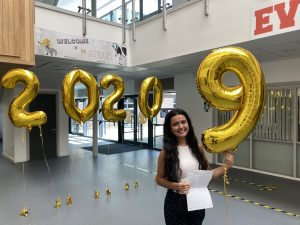 Former St Alphonsus Primary School pupil Alyssa Marie Sequera, whose first language is Spanish, achieved grade 9s in eight subjects, Maths, English Literature and Language, Biology, Chemistry, Physics and RE, as well as two grade 8s, including Further Maths.
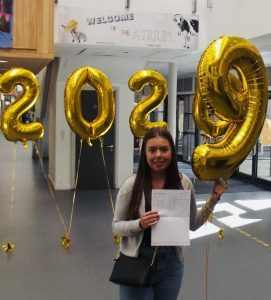 Jennifer Armstrong, a former pupil of St Clare’s Primary School, achieved grade 9s in English Language and Literature and Physics, plus five grade 8s including Maths.
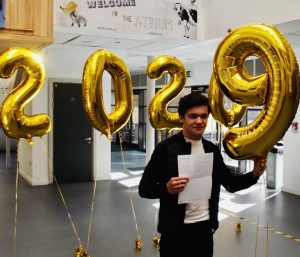 Former St Edward’s Primary School pupil Harvey Kaid, who regularly represented the school in athletics, achieved five grade 9s including English Language and Literature, Physics, Biology and RE and three grades 8s.
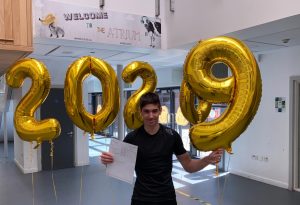 Charbal Ajaka achieved four grade 9s, in Computer Science, Combined Science, History and RE, and three grade 8s, in English Language, English Literature and French.
 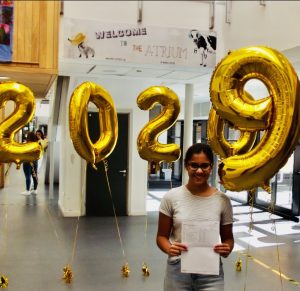 Former St Edward’s pupil Imaya Pathirana will move on to Trinity Sixth Form after achieving four grade 9s, in Business, RE, History and Computer Science, with 8s in English, Maths and Combined Science and a grade 7 in Further Maths.
 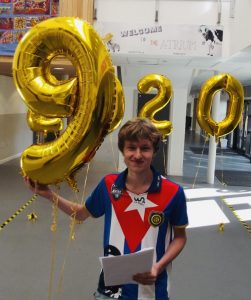 Former St Clare’s pupil Tom Aspery achieved three grade 9s, in History, Geography and RE, with grade 8s in three other subjects.
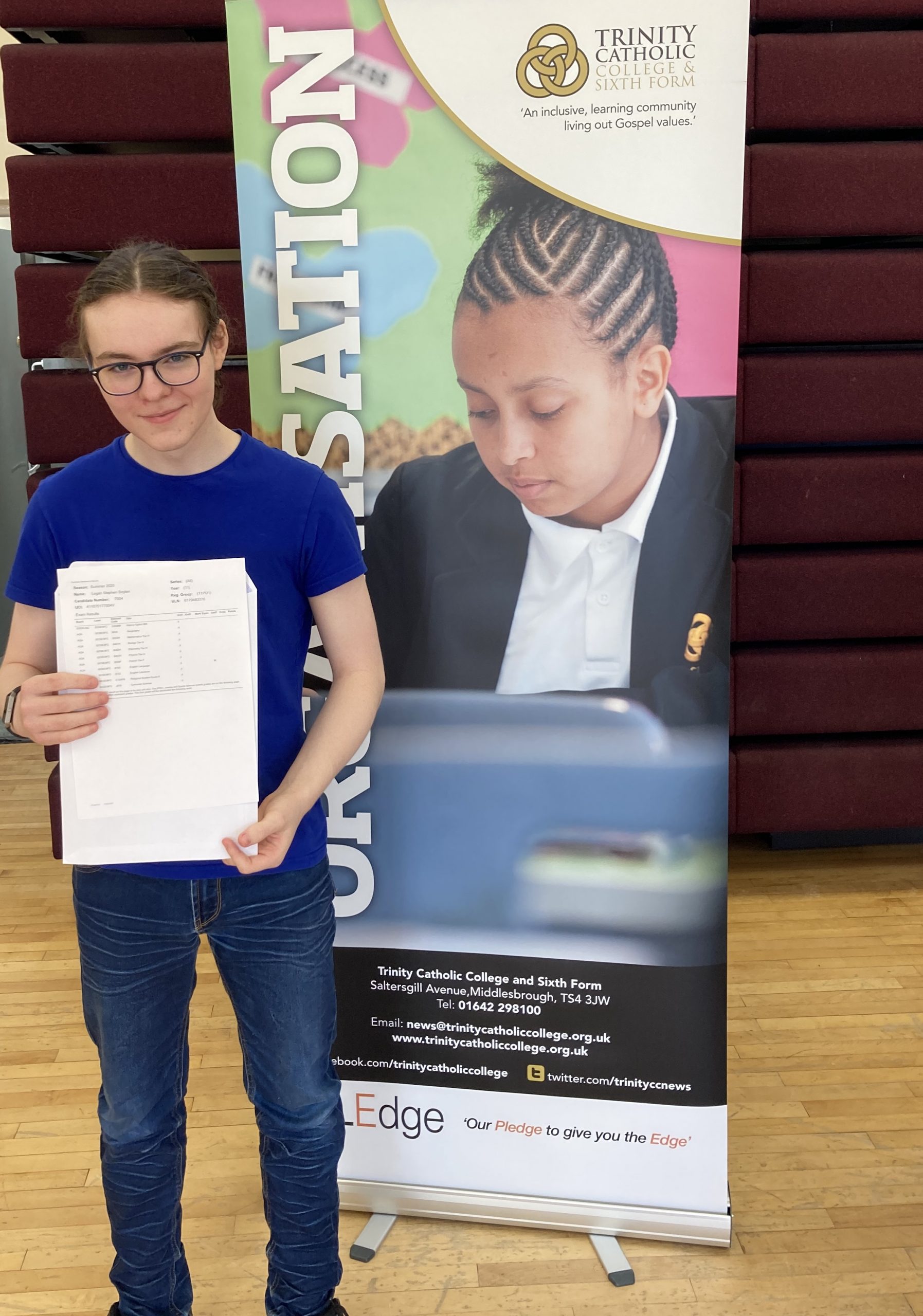 Logan Boylen achieved an impressive three grade 9s in his triple science and four grade 8s.
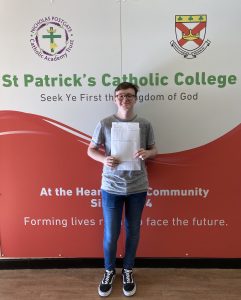 Former St Patrick’s Primary School pupil Kane Hunter is elated after achieving a grade 9 in History, two grade 8s and two grade 7s.
 Former Christ the King Primary School pupil Heidi Parry is overjoyed after achieving a grade 9 in RE and three grade 8s, in English, Geography and Science.
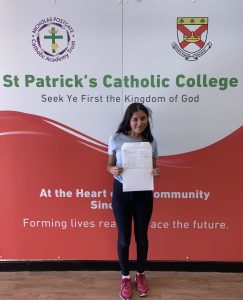 Former Christ the King Primary School pupil Hazel Newton achieved a grade 9 in RE as well as five grade 8s and four grade 7s.
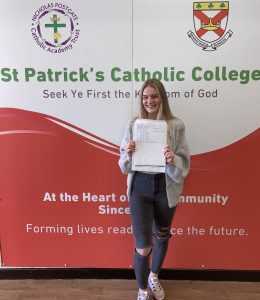 Kayley Walton, a former student of St Patrick’s Primary School, gained passes in all her subjects and is especially pleased to have achieved a grade 8, three grade 7s and four grade 5s.
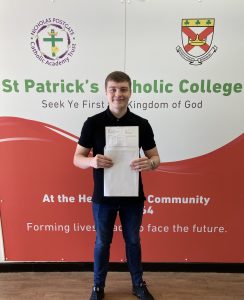 Ben Gowland is delighted at achieving his one grade 8, three grade 7s and two grade 6s.